Blog Post #4 Text Set
The six texts I am presenting in this set explore climate change and how it can be taught in an ELA classroom. This unit will be for a 9th grade classroom and revolve around the book Dry by Neal and Jarrod Shusterman. I would draw on what the students already know about climate change and water shortages throughout the world (presumably what they've learned in other courses). Although the novel is fiction, the other texts in this set will bring the real world to the classroom. My goal would be for the students to see that the world is bigger than just their small community and that their life choices, like water conservation, has an impact in the world.
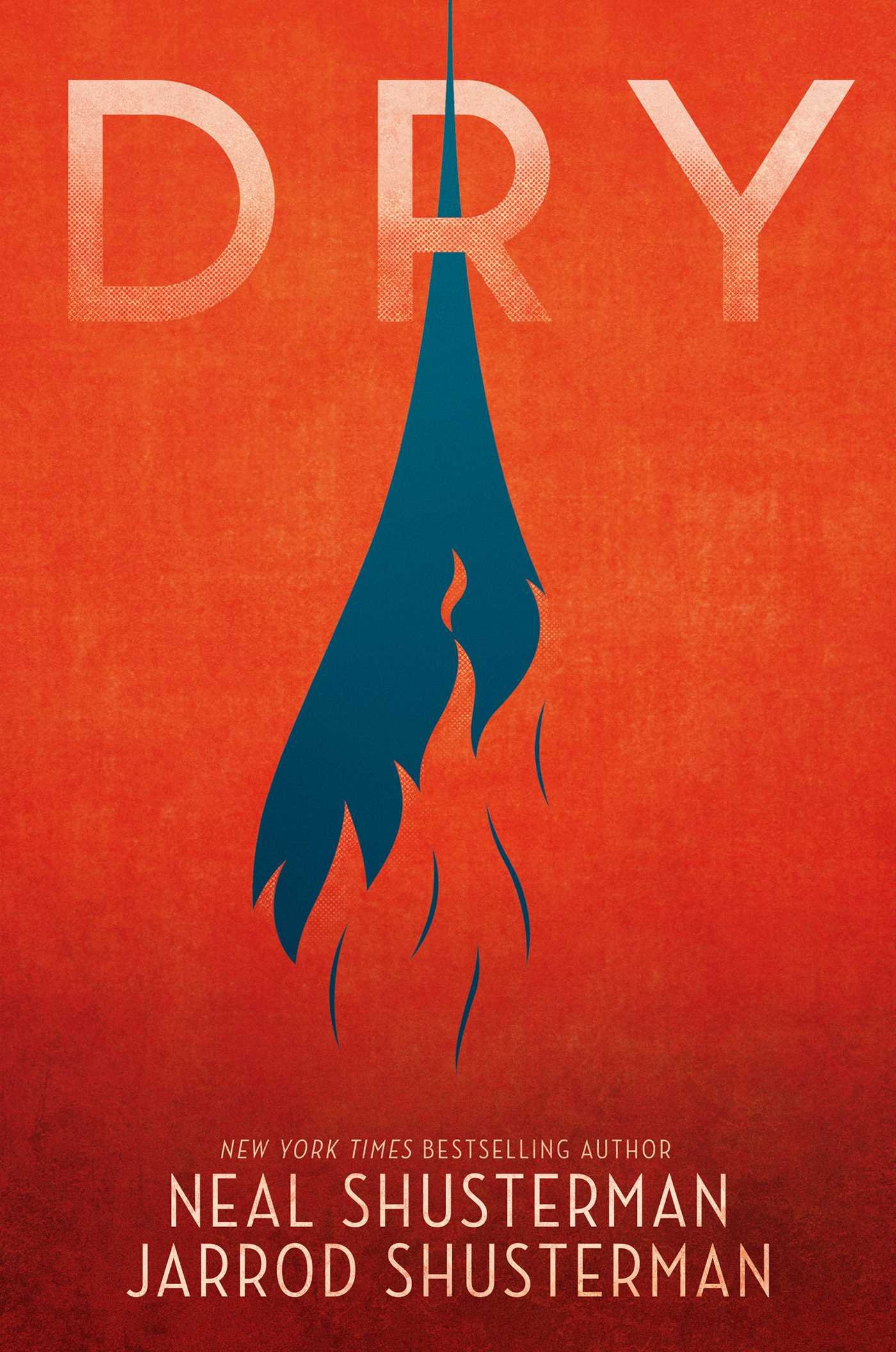
Shusterman, Neal and Jarrod Shusterman. Dry. Simon and Schuster, 2018.
Summary:
The Colorado river has been cut off for southern California in what is known as the "Tap Out." When their parents don't return from trying to find water for their family, Alyssa and her brother go on their own journey to find water.
Analysis:
Quantitative: The novel has a readability level of 7th grade. It is easy to read, but it is quite long, at 390 pages, which is why it might be more appropriate for 9th-10th grade readers.
Qualitative: The book shows what would happen if the water supply was shut off. It should garner questions about climate change and how/why this would happen in the first place. Students have the opportunity to look at the bigger picture and see how this situation does in fact connect with real issues in southern California, and also in other places throughout the world.
Purpose:
I would use this novel in a unit focusing on climate change. This unit could easily connect with other courses the students may be taking. This novel brings cultural relevance to the classroom. In combination with the various other texts in this set, students will be able to have an understanding about how climate change is a real issue in today's society. The goal is to make students aware of the problem and focus on ways they can change their own habits and lifestyles to promote a healthier, cleaner society.
Vocabulary:
Reservoir, Potable, Dehydration, Canteen, Desalinization, Levee
Question:
Has this novel impacted your view on water conservation? Why or why not? Does it leave you with unanswered questions?

Runyon, Luke. "Amid a Megadrought, Federal Water Shortage Limits Loom for the Colorado River." NPR.org, https://www.npr.org/2021/07/13/1013446314/amid-a-mega-drought-a-water-shortage-will-be-declared-along-the-colorado-river
Summary:
This article/podcast discusses the water shortages from the Colorado River that supplies water to several southwestern states and its effect on these communities, farmers, and climate change.
Analysis:
Quantitative: This article has a readability of 9th grade. It's a short article and can either be read or listened to on this website.
Qualitative: This article puts a real world perspective on water shortages in the southern California area. It will help students make connections to places in the book and that droughts and diminishing water supplies are real issues in these southwestern communities. Students can start making connections between the article and the events that led up to the "Tap Out" in the novel.
Purpose:
I would use this article to show my students that water shortages in the southwest are a big and continuing issue. This article is dated less than a month ago (July 13, 2021). I like this article because it talks about the Colorado river and its low water levels, which is what happened in the book. I think students can learn from this article about the severity of water shortages and think about the decisions that were made in the book that led to authorities shutting off the water supply to southern California where Alyssa and her family live.
Vocabulary:
Parched, Basin, Drought, Irrigation, Delta, Watershed
Question:
Do you think shutting off the water supply from the Colorado River to southern California had an impact on other communities that depend on the river for water? Why or Why not?

Harris, Chris. Colorado River Basin Map. 2012. http://gcdamp.com/index.php?title=File:Colorado_River_Basin-_MAP-_CRBC-_Chris_Harris.jpg
Summary:
This is map of the Colorado River and all of the states that it runs through. It also shows the main basins, reservoirs, and aqueducts that run from the river.
Analysis:
Quantitative: An easy to read map suitable for the 9th grade level this unit is designed for.
Qualitative: This map will aid readers in visualizing the Colorado River and it's impact on surrounding communities. Along with being a visual aid for the novel, it can also be helpful with some of the other texts within this text set.
Purpose:
This purpose of this map is simple, a visual aid for the texts within this set. This map will help students get a better understanding of how many people rely on the Colorado River as its main water source.
Vocabulary:
Basin, Reservoir, Aqueduct
Question:
About how many people do you think depend on the Colorado River as its main source for clean/drinking water?

Summary:
This video shows the water crisis that is currently happening in the world due to climate change and expanding world population
Analysis:
Quantitative: This 18 minute video will be suitable for the 9th grade students this unit is planned for.
Qualitative: This highly informative video is a crash course on the water crisis in the world. It would require an advanced audience who can understand that water has value, like money, gold, or oil. I would suggest this video for students 9th grade and older who can comprehend this idea value and the various other terms used throughout the video.
Purpose:
This video should be used as an awareness to the water crisis in the world. While the book discusses the water shortages in southern California, the video explains how the Colorado River also disperses water to Mexico. Additionally, the video will allow students to think bigger than just the US, as it talks about "Day Zero" for Cape Town, South Africa. Students can connect the "Tap Out" from the novel to "Day Zero" in real life (which fortunately was postponed indefinitely).
Vocabulary:
Aquifer, Arid, Ground Water
Question:
How is the "Tap Out" from the novel similar to "Day Zero" in Cape Town? In what ways are they different?

"Shadow of Drought: Southern California's Looming Water Crisis". YouTube, Uploaded by Palomar Films, 10 Mar 2021. https://www.youtube.com/watch?v=Df281Y6hhfI
Summary:
A documentary about California's water crisis. This video discusses the impact that climate change has had on the Colorado river, why desalination isn't a booming business, and how the community reacts during and after a drought.
Analysis:
Quantitative: This video is over 40 minutes long and packed full of information. It would take most if not all of a class period to watch this video. This video is geared for adults, but would be acceptable for high school students.
Qualitative: This video has some advanced language and vocabulary that would require a higher knowledge level. As it is a video the skills needed aren't so advanced which is why I would rate this acceptable for 9th grade viewers. With the advanced vocabulary and combined images the video makes the information easier to understand.
Purpose:
I would use this video as a supplement to the main text as it discusses the water issues in California. Particularly, it talks about the Colorado river and its diminishing water supply. Another feature I like, is that it talks about desalination and how costly that it can be. Which is an important issue in Dry. I think this video could help answer a lot of questions or theories that the students may have while reading the novel.
Vocabulary:
Drought, Conservation, Infrastructure
Question: Did this video help with your understanding about desalination and why it didn't work in the novel?

Murray, Brin. "Interview with Neal Shusterman." Blogspot.com, KidsBooksNZ. http://kidsbooksnz.blogspot.com/2019/05/interview-with-neal-shusterman-by-brin.html
Summary:
This blog features an interview with one of the authors of the book, Dry, Neal Shusterman. It is a Q&A style and focuses on this specific novel.
Analysis:
Quantitative: This is a short article and it's readability places it at a 6th grade level
Qualitative: This article is easy to read and seems to be a Q&A between the author and a 9th grade student, which is why this article would be perfectly acceptable for the 9th grade students this unit is designed for.
Purpose:
I think this article would be a great way to find out why the author's wrote this novel and what their purpose was. I like how the author's connect the novel with the real-world "Day Zero" in Cape Town. I think this article would be a good way to end the unit and connect all the of the texts in this set together.
Vocabulary:
Parallels, Sociopathic, Manipulative
Question:
If you could ask the authors a question regarding Dry, what would you ask?


Comments
Post a Comment